
The Irish national football team finds itself embroiled in controversy ahead of its UEFA Nations League matches against Israel, raising calls for a boycott and generating political tensions. The uproar stems from comments made by Republic of Ireland manager Heimir Hallgrímsson, who likened playing against Israel to “playing against genocide.” This statement has prompted a backlash from the Israel Football Association, which criticized Hallgrímsson’s remarks as “stupidity, ignorance, and hypocrisy.”
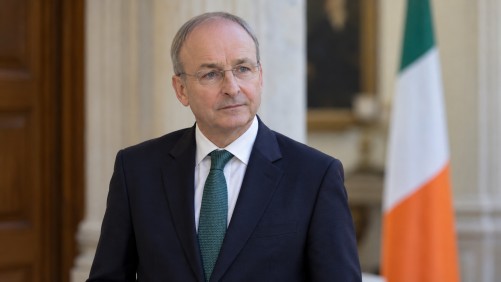
The situation intensified when Irish Prime Minister Micheál Martin stepped into the fray, labeling the Israeli football body’s comments as “unacceptable” and calling for their withdrawal. Speaking in New York during the UN General Assembly, Martin defended Hallgrímsson, also expressing concerns about the humanitarian issues in Gaza. His intervention underscores the broader political implications and sensitivities surrounding these sporting events.
Despite the controversy, the Football Association of Ireland (FAI) has confirmed that the matches will proceed as planned. The first game is scheduled to take place on September 27 in Debrecen, Hungary, with a follow-up match set for October 4 in Bačka Topola, Serbia. Both matches will be held at neutral venues, with the latter match occurring behind closed doors, which could potentially reduce the immediate public fallout.
The debate over the matches has not been limited to political figures. Several prominent Irish sports personalities have echoed calls for a boycott, reflecting broader discontent and the complex intersection of sports and politics. However, the FAI has highlighted the potential consequences of withdrawing, suggesting that the decision to play was made after careful consideration of these implications.
As the matches approach, the controversy serves as a reminder of how international sporting events can become entangled with geopolitical issues, transcending the boundaries of the pitch. The unfolding situation will likely continue to draw attention both on and off the field, as stakeholders navigate the intricate balance between competitive sports and international relations.