
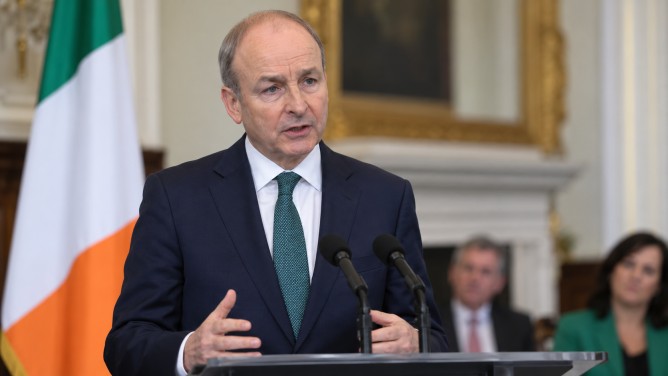
Irish Taoiseach Micheál Martin remains optimistic about reaching a consensus on the European Union’s next seven-year budget, even as divisions persist among member states regarding expenditure levels and funding priorities. Martin’s confidence comes amid his country’s presidency of the EU, during which Ireland has introduced a draft framework aimed at facilitating discussions based on the European Commission’s initial €1.72 trillion proposal.
The draft has faced criticism from nations advocating for deeper spending cuts, while the European Commission has voiced concerns about the loss of financial flexibility and important safeguards. Martin acknowledged the challenge of reconciling diverse demands, with some countries pushing for reduced budgets and others emphasizing the need to protect allocations for regional development and the Common Agricultural Policy. He emphasized that Ireland’s proposal seeks to expedite negotiations rather than cater to every member state’s preferences.
Negotiations will now involve European Council President António Costa alongside EU national leaders, with the goal of securing an agreement by December. This timeline is crucial to ensure that the budget can be approved and implemented by January 1, 2028.
Additionally, EU leaders are set to tackle other pressing issues, including escalating trade tensions with China, surging energy prices, migration, and the economic fallout from the ongoing conflict involving the United States, Israel, and Iran. Trade relations with China are under scrutiny following the EU’s decision to limit imports of Chinese hybrid cars and address its significant goods trade deficit with the country, which reached €360 billion in 2025. Proposals from France and Germany advocating for stricter measures against imports of chemicals and PET plastics are anticipated to garner attention.
As global oil and gas markets tighten, leading to potential increases in household electricity bills this winter, member states are urging action to alleviate energy costs. EU leaders are expected to discuss short-term measures alongside existing energy and emissions regulation proposals.
The summit will also focus on ongoing support for Ukraine amid intensified Russian attacks and uncertainties regarding US assistance. Ukrainian President Volodymyr Zelenskyy is expected to engage with European leaders to explore further political, financial, and military support for Kyiv.