
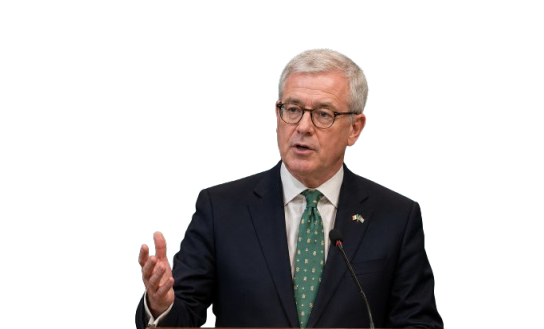
The European Union (EU) has underscored the significance of its strategic partnership with India, emphasizing enhanced cooperation in areas such as trade, technology, security, and connectivity. Both parties are actively working toward finalizing a landmark Free Trade Agreement (FTA) by the year’s end. This development was highlighted during the inauguration of Ireland’s presidency of the Council of the European Union, where Irish Ambassador Kevin Kelly remarked that the EU’s collaboration with India goes beyond mere trade, encompassing technology, research, climate action, maritime security, resilient supply chains, and digital cooperation.
Ambassador Kelly noted that the strengthening of ties between India and the EU is aimed at tackling mutual global challenges and fostering long-term economic growth. The anticipated India-EU Free Trade Agreement, which has already seen the conclusion of negotiations, is slated for formal signing by December, potentially coming into effect early next year. This agreement is poised to further expand cooperation in crucial sectors such as defense, security, and emerging technologies, especially considering the evolving global economic and geopolitical landscape.
EU Ambassador Herve Delphin shed light on how Europe and India are navigating a shifting global environment by seeking greater strategic autonomy while maintaining robust partnerships. He emphasized the critical need to safeguard freedom of navigation and secure global trade routes, advocating for closer collaboration between India and the EU in maritime security and ensuring regional stability.
The commitment to a comprehensive partnership between the EU and India reflects a broader strategy to address the demands of a changing world. As both regions enhance their cooperation across various domains, the forthcoming Free Trade Agreement stands as a testament to their shared objectives and mutual interests. By building on this foundation, India and the EU are poised to contribute significantly to global economic growth and security, reinforcing their roles as key international players.