
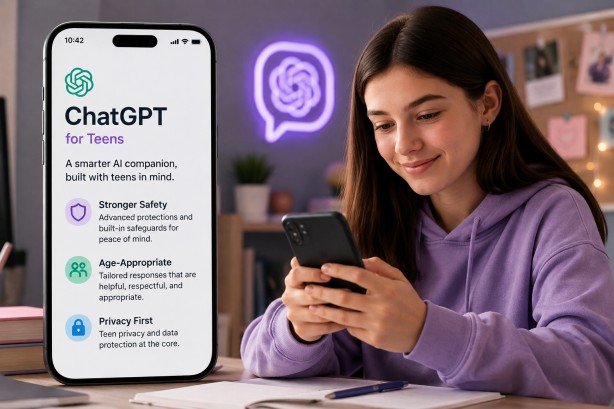
OpenAI has introduced a new version of its artificial intelligence tool, ChatGPT, specifically designed for teenagers between the ages of 13 and 17. This version comes equipped with enhanced safety measures and protections tailored to be appropriate for younger users. It restricts access to content concerning self-harm, suicide, and sexual or romantic conversations, aiming to create a safer online environment for teenagers who use AI for educational purposes, daily inquiries, and even companionship.
To promote healthier AI usage, the teen-focused ChatGPT version incorporates features that allow parental oversight. Parents can link their accounts to set designated quiet hours, during which access to ChatGPT is restricted for their teenagers. Additionally, in situations deemed high-risk, parents may receive notifications to alert them to potential safety concerns. OpenAI is also implementing extra measures to safeguard against sensitive issues such as eating disorders, by limiting harmful information and guiding users towards offline support resources when necessary.
In order to prevent the development of unhealthy emotional dependencies on the chatbot, the teen version is designed to ensure that the AI does not exhibit or suggest personal feelings, consciousness, or emotions towards users. This approach is intended to maintain clear boundaries between human users and artificial intelligence, reinforcing the distinction between real and simulated emotions.
OpenAI employs age-assurance technology to estimate whether a user is under 18, using factors such as the manner in which they interact with the service. When identified as minors, users are transitioned into the teen version of ChatGPT, which includes these additional protective features.
In the realm of education, ChatGPT for Teens is structured to encourage students to engage with and solve problems, rather than simply providing them with answers or completing assignments on their behalf. This methodology is designed to position AI as a supportive study tool, enhancing the learning process rather than replacing traditional educational methods.