
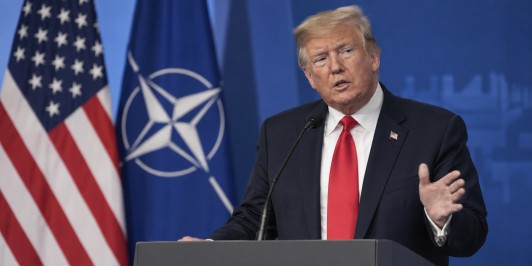
NATO’s decision to increase defense and security spending to 5% of GDP by 2035 marks a substantial shift in the alliance’s approach to collective security. This move is expected to bolster military capabilities and defense production among member countries, significantly enhancing NATO’s overall resilience and preparedness.
During the United Nations General Assembly in New York, U.S. President Donald Trump praised the commitment, highlighting it as a vital advancement for NATO. The new agreement, established at the 2025 NATO Summit in The Hague, sets a new benchmark compared to the previous 2% target. Under the terms, member nations are to allocate at least 3.5% of GDP to core defense requirements, with an additional 1.5% directed towards defense-related investments and security needs.
This increase in spending reflects a broader strategy by European allies and Canada to enhance their defense capabilities. According to NATO, these countries have already made significant progress, with a nearly 20% rise in core defense expenditure in real terms reported in 2025 compared to the previous year. The commitment to reach the 5% target by 2035 underscores the alliance’s dedication to strengthening its military posture amid global security challenges.
In his address, President Trump also called for an end to the ongoing conflict between Russia and Ukraine, citing the severe loss of life as a critical concern. He reiterated the United States’ commitment to pursuing diplomatic efforts to resolve the war, underscoring the importance of peace and stability in the region.
The enhanced defense spending aligns with NATO’s efforts to maintain a robust collective security framework and address emerging threats more effectively. This initiative not only strengthens military readiness but also aims to foster greater collaboration and investment in defense technologies among member states.