
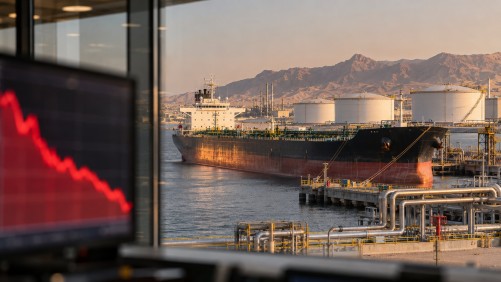
Global oil prices are on track for a third consecutive weekly decline, driven largely by robust crude exports from the Middle East that have alleviated fears of supply shortages. Despite ongoing geopolitical tensions, the recovery of oil shipments through the Strait of Hormuz has played a significant role in stabilizing supply expectations.
On Friday, Brent crude futures fell by 0.7% to $91.31 per barrel, and US West Texas Intermediate (WTI) crude decreased by 0.4% to $82.85 per barrel. Brent crude is poised for a weekly loss of nearly 5%, while WTI is expected to drop by approximately 6.5%. The increase in Middle Eastern exports has helped balance the market, even as concerns about security threats in key shipping routes persist.
Geopolitical risks continue to cast a shadow over the oil market. The Iran-aligned Houthi movement in Yemen has issued warnings about potential attacks on Saudi Arabia’s Red Sea ports, including Jeddah, following intensified military operations in Yemen. Additionally, Iran’s Revolutionary Guards Navy reported that two oil tankers had encountered naval mines in the Strait of Hormuz, further heightening concerns over the safety of international energy shipments.
The upcoming OPEC+ meetings scheduled for November 29 are drawing market attention, as member countries and their allies will discuss oil production policies for 2027. The outcomes of these discussions could significantly impact global supply levels and influence future price trends.
Furthermore, the International Energy Agency has cautioned that prolonged disruptions in global energy trade could accelerate the transition towards electrification, energy efficiency, and alternative fuels, potentially reducing long-term oil demand. These warnings highlight the complex dynamics at play in the energy sector.
Economic factors also contribute to the pressure on oil prices. Concerns about weaker global economic activity and declining stock markets are adding to the downward trend. Analysts are closely watching developments in Russia, where Ukrainian attacks on oil refineries and export infrastructure could impact crude production and supply.
While strong Middle Eastern exports have recently supported the decline in oil prices, the persistent tensions around the Strait of Hormuz and other critical energy routes remain significant risks for the global oil market. The interplay of these factors continues to shape the outlook for oil prices and market stability.